

The straight seam steel pipe refers to the steel pipes that their welds are parallel to the length of the steel pipe. Its production process is relatively simple. The strength of the spiral steel pipe is generally higher than the strength of the straight seam steel pipe. It can produce larger diameter welded pipes with a narrower rough, or use the same width material to produce different diameter welded pipes, but compared with straight welded pipes of the same length, the length of the weld is increased by 30 %-100 %. The production speed has slowed down. According to its production process, it can be divided into high -frequency straight seam steel pipes and buried arc welding straight seam steel pipes. The buried arc welding straight seam steel pipes are divided into UOE, RBE and JCOE steel pipes according to their molding methods.
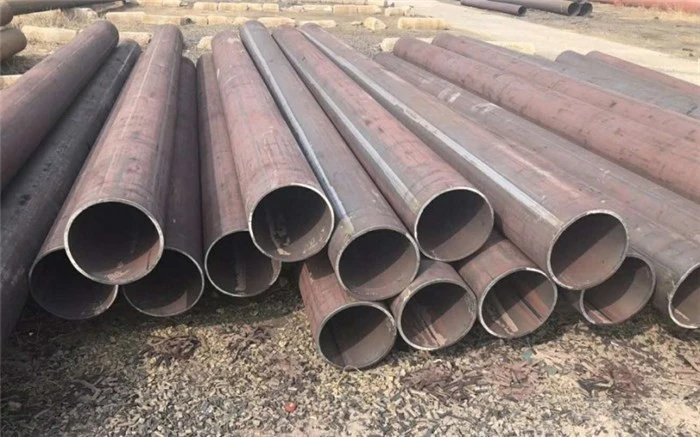
The molding process of straight seam steel pipes
The straight seam steel pipe needs to perform mechanical performance tests, flattened tests, and expansion tests, and ensure that it meets the standard requirements. Steel pipes should be able to withstand certain internal pressure. If necessary, a 2.5MPa pressure test is performed and kept for 1 minute without leakage. The vortex test method can replace the hydraulic test. According to the GB7735 "Steel Tube Vortex Detective Method" standard, the vortex detection is performed. The overall scanning of the weld is automatically processed and automatically classified by the exploring signal through the vortex probe to achieve the purpose of the detection. After the detection, the welded pipe is cut into the specified length with a flying saw, and the turning rack is offline. The two ends of the steel pipe should be flat, and the mark should be printed. Before leaving the factory, bundle the finished pipe into hexagonal and pack it.
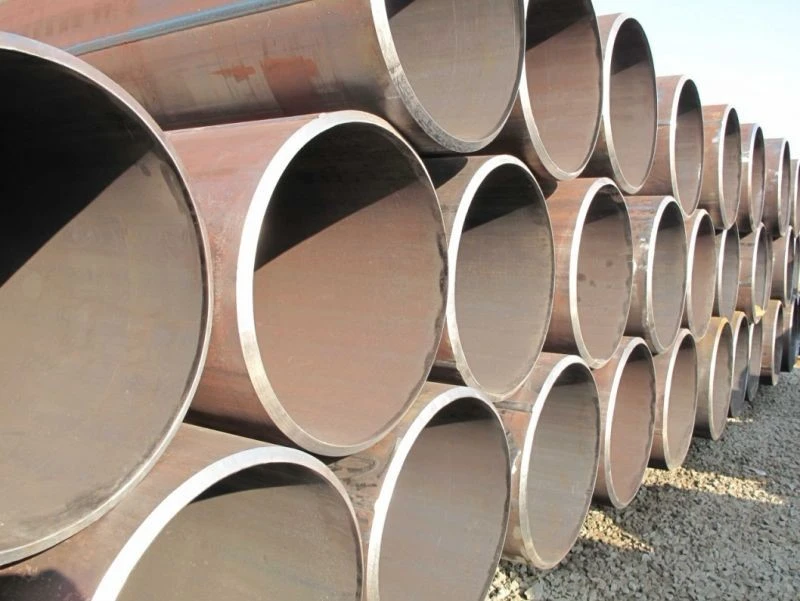
There are still the following ways to process the processing method of straight steel pipes:
1. Forging steel, use the repeated impact of the forging hammer or the pressure of the pressure machine to change the shape of the rough to the shape and size we need;
2. Squeezing, this is a kind of placing metal in a closed extruder, and putting pressure on one end to squeeze the metal from the specified mold hole, so as to obtain a processing method with the same shape and size finished product. Production of metal materials;
3. Rolling, this is a way of pressure treatment, where the billet passes through the gap between a pair of rotating rollers, and the material cross section is reduced and the length is increased due to the compression of the roller;
4. Pulling steel is the processing method of metal blank that has been rolled rolled by rolled metal materials to reduce cross -section and increase length. Most of this processing method is used for cold processing.