

Galvanized steel pipes are divided into cold galvanized steel pipes and hot -dip galvanized steel pipes. Cold galvanized steel pipes have been disabled, and the latter is also promoted to be temporarily used by the state. In the 1960s and 1970s, developed pipes began to develop new pipes internationally internationally, and galvanized pipes were prohibited. The four ministries and commissions such as the Ministry of Construction of China have also made articles clearly disabled the galvanized galvanized pipe as a water supply pipe from 2000. The cold water pipes in the new communities have rarely used the galvanized pipes. The heat water pipes in some communities use the galvanized pipe. The hot -dip galvanized steel pipes are widely used on fire, electricity and highways.
The weight coefficient of galvanized steel pipe
Nominal wall thickness (MM): 2.0, 2.5, 2.8, 3.2, 3.5, 3.8, 4.0, 4.5.
Coefficient parameters (C): 1.064, 1.051, 1.045, 1.040, 1.036, 1.034, 1.032, 1.028.
Note: Steel mechanical properties are important indicators to ensure the final performance (mechanical performance) of steel. It depends on the chemical composition and thermal treatment system of steel. In the steel pipe standard, according to different use requirements, stretching performance (tensile strength, yield strength or yield point, elongation point) and hardness, toughness indicators, and high and low temperature performance required by users.
Steel number: Q215A; Q215B; Q235A; Q235B.
Test pressure value /MPA:D10.2-168.3mm is 3MPa; D177.8-323.9mm is 5MPa
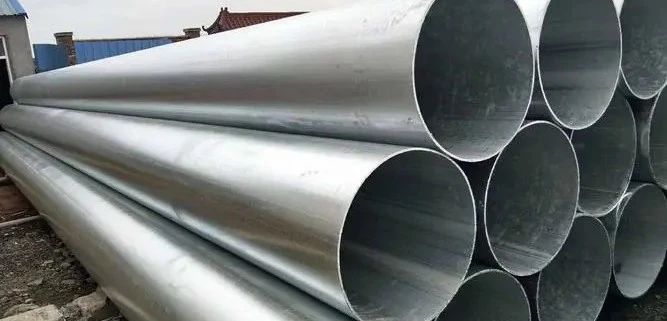
Technical requirements for galvanized steel pipes
1. Brand and chemical ingredients
The plates and chemical components of galvanized steel pipes should meet the cards and chemical components of the black pipe steel specified in GB/T3091.
2. Manufacturing method
The manufacturing method (furnace welding or welding) of the black tube is selected by the manufacturer. Galvanizing uses hot -soaking galvanized method.
3. Thread and pipe joint
(A) Galvanized steel pipes with threaded delivery should be carried out after galvanized. The thread should comply with the regulations of YB 822.
(B) The steel pipe joint shall comply with the regulations of the YB 238; the forged cast iron pipe joint shall comply with the provisions of the YB 230.
4. Mechanical performance The mechanical properties before galvanized steel pipes shall comply with the regulations of GB 3091.
5. The uniformity of galvanized layer The galvanized steel pipe shall be trial of the uniformity of galvanized layer. The steel pipe sample is impregnated with copper sulfate solutions for 5 consecutive times and cannot become red (copper -plated).
6. Galvanized steel pipes with cold bending tests with a caliber of not greater than 50mm should be used for cold bending tests. The curved angle is 90 °, and the curved radius is 8 times the outer diameter. Without filling during the test, the sample weld should be located on the outer or upper part of the curved direction. After the test, there should be no cracks and zinc layers on the sample.
7. The hydraulic test hydraulic test should be performed in the black tube, and the vortex can also be used instead of the hydraulic test. Test pressure or vortex detection comparison sample size shall comply with the regulations of GB 3092. Steel mechanical performance is an important indicator of ensuring the final performance (mechanical performance) of steel.