

The hot -dip galvanized round tube is a hollow and round cross -section light -shaped thin -walled steel pipe. It is a steel pipe formed by the Q235 steel band or coil as the basic material. In addition to the production and processing of thick wall galvanized pipes, some parts have reached the level of transcendence of resistance welding cold galvanized circular tube.
The galvanized round tube with large or thick walls is generally made of billet materials, and the small thin -wall galvanized round tube of the pipe diameter can be obtained by welding technology after curling the steel belt. Then obtained after polishing, it becomes galvanized round tube after galvanizing. Therefore, the small pipe diameter round pipe is generally straight welded pipe, and the large pipe diameter welded pipe is generally spiral welded pipe. Its steel has excellent comprehensive performance, excellent welding performance, excellent anticorrosive ability, and good toughness.
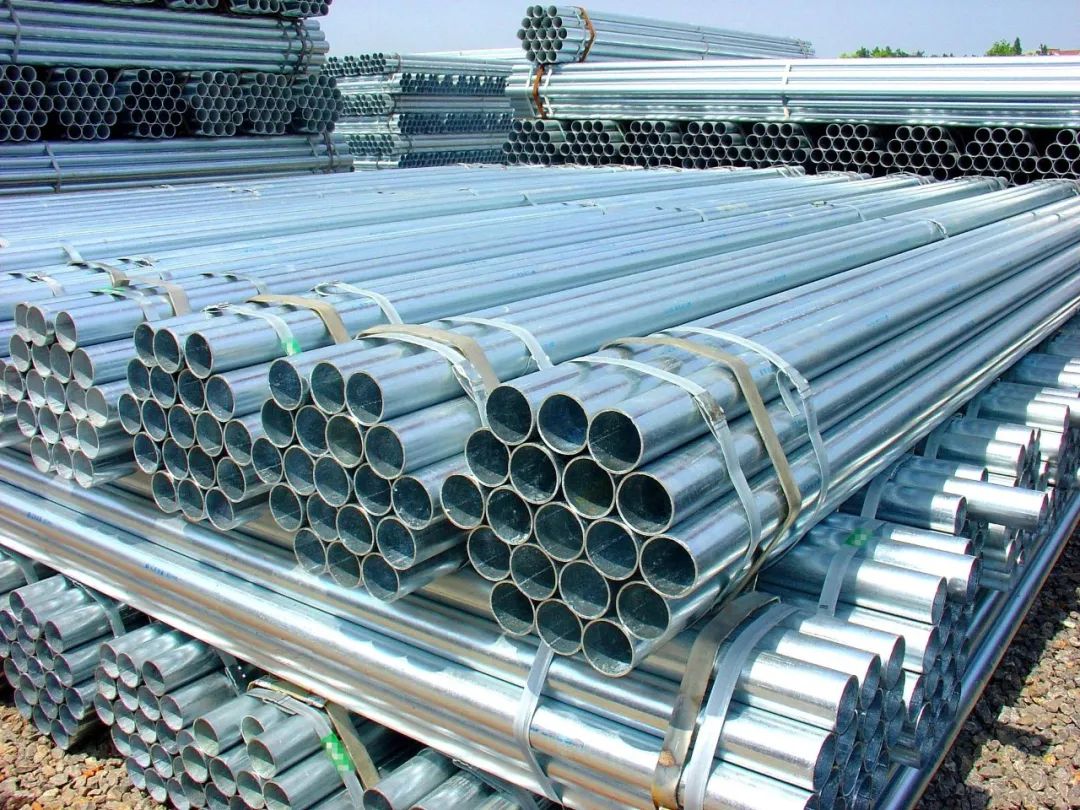
The processing technology of hot -dip galvanized round tube is simple, the production efficiency is high, the initial cost is small, and the market has developed rapidly. The spiral tube itself is greater than the galvanized round tube. It can use narrow steel band blank materials to process large -caliber welded pipes. It can also use the same width steel band to produce a multi -specified pipe diameter round tube. Compared with the straight seam tube, its weld length is longer, so production is difficult and the processing time is used.
Therefore, the small -caliber galvanized pipe uses the processing method of docking welding. The large -caliber steel pipes mostly use galvanized spiral pipes, and the appropriate processing process is selected according to the size of the cross -sectional area. When the length of the peripheral surface of the pipeline is the same length, the circular area will be larger than other shapes. The use of circular pipes can transport larger flow media. In addition, when the circular pipeline is under pressure from the internal and external pressure, the force is more uniform. Therefore, most of the conveying pipes use the circular pipe.