

The production process of general seamless steel pipes can be divided into two types: cold and hot -rolled. Hot -rolled, as the name suggests, the temperature of the rolling parts is high, so the deformation resistance is small, which can achieve a large deformation. Take the rolling of the steel plate as an example. Generally, the thickness of the casting blank is about 230mm, and after rolling and refined rolling, the final thickness is 1 ~ 20mm. At the same time, because the width ratio of the steel plate is small, the size and accuracy requirements are relatively low, it is not easy to occur on the plate -shaped problem, mainly to control the convexity.
Hot -rolled seamless steel pipe: Hot rolling is relative to cold rolling. Cold rolling is rolled below the crystallization temperature, and the hot rolling is rolling above the crystallization temperature.

advantage
It can destroy the casting organization of steel ingots, refine the grains of steel, and eliminate the defects of microstrip organizations, so that the steel tissue is dense and the mechanical performance is improved. This improvement is mainly reflected in the direction of rolling. As a result, the steel is no longer the same as the same sex; the bubbles, cracks and loose air bubbles formed during pouring. It can also be welded under high temperature and pressure.
shortcoming
After the hot rolling, non -metallic mixed materials inside the steel (mainly sulfides and oxides, and silicate) are pressed into thin slices, and layered (sandwich) phenomenon occurs. The hierarchy makes the performance of the steel in the thickness of the thickness, and it is possible to tear the layer when the weld shrinkage. Local strain induced welded seams often reaches several times the yield point strain, which is much larger than the strain caused by loads.
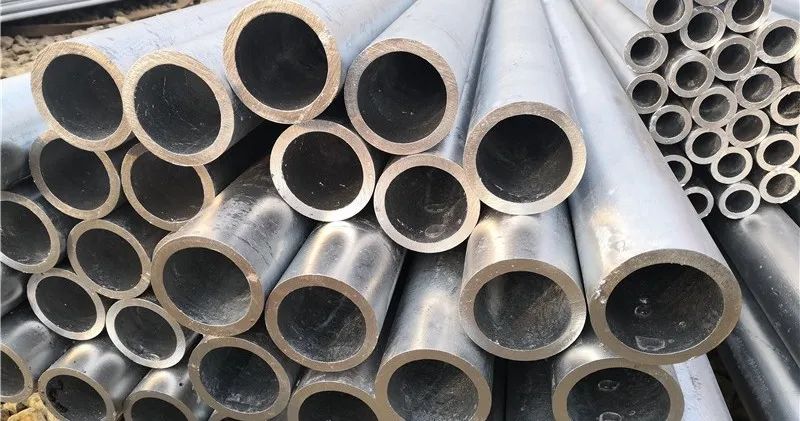
The seamless steel pipe is a steel pipe without welded cramps made of hot processing methods such as perforation hot rolling. If necessary, the tube after heat processing can also be further processed to the required shape, size and performance. At present, seamless steel pipes (DN15-600) are the most used pipes in petrochemical production devices.
Because of its different manufacturing processes, it is divided into two types: hot -rolled (squeezing) seamless steel pipes and cold pipes (rolled) seamless steel pipes. Cold -pulling (rolled) tube is divided into two types: circular tube and alien tube.
a. Craft process overview
Hot -rolled (squeezing seamless steel pipe): round tube blank → heating → perforation → three -roller oblique rolling, continuous rolling or squeezing → deserture → fixed diameter (or reduction diameter) → cooling → straight → water pressure → water pressure Test (or detecting) → mark → enter the warehouse.
Cold drawn (rolled) seamless steel pipe: round tube billet → heating → perforation → heading → annealing → pickling → oiling (copper plating) → multiple passes of cold drawing (cold rolling) → billet tube → heat treatment → straightening → water pressure test (defect detection) → marking → storage.