

Welding and cutting the spiral steel pipe structure in the application of spiral steel pipes is inevitable. Because of the characteristics of the spiral steel pipe itself, it has its particularity than the welding and cutting of the spiral steel pipe compared with the common carbon steel, and it is more likely to produce various defects in its welding joint and thermal influence area (HAZ). In the following aspects, high -temperature cracks are called high -temperature cracks here refer to cracks related to welding. High -temperature cracks can be roughly divided into coagulation cracks, micro -cracks, cracks and re -heating cracks in the HAZ (thermal influence area).
Low temperature cracks sometimes occur in low temperature cracks in the spiral steel pipe. The main reason for it is the degree of constraints of hydrogen diffusion, welding joints and the hardening tissue in it, so the solution is mainly to reduce hydrogen diffusion during welding, properly preheat and after welding heat treatment, and reduce the constraints.
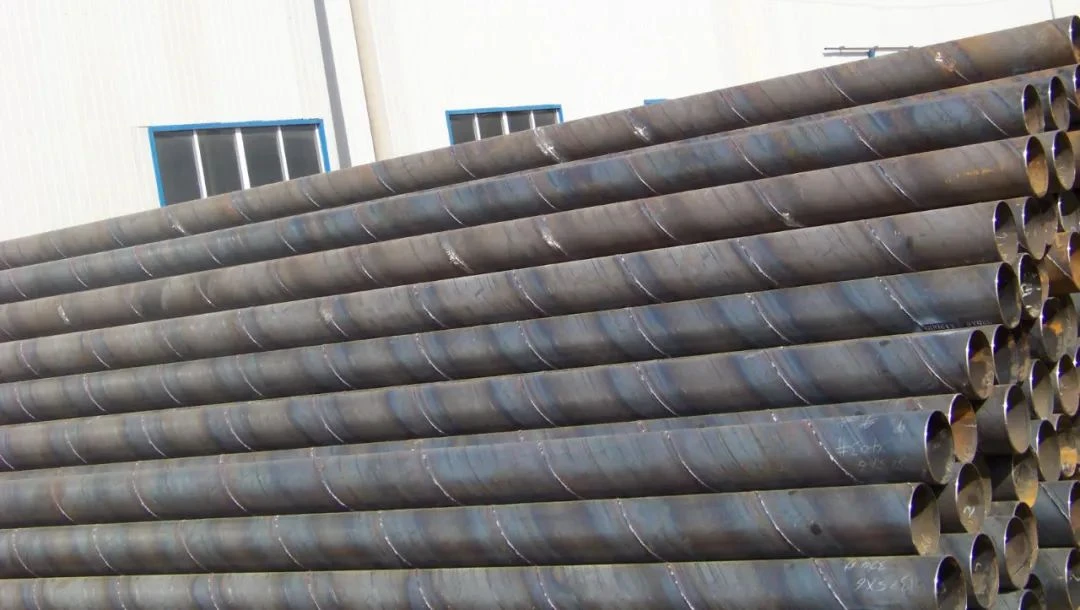
The toughness of the welded joint is sensitive to high temperature cracks in the spiral steel pipe. In terms of component design, it usually has 5%-10%of ferrite. However, the presence of these ferrite has led to a decline in low temperature toughness.
When the spiral steel pipe is welded, the Austrian volume in the welding joint area is reduced and affects the toughness. In addition, following the increase in iron, its tough value has a significant decline. The reason why the toughness of the welding joint of high -purity iron body stainless steel has been proven to be significantly reduced by the mixed carbon, nitrogen, and oxygen.
The oxide content in some steel welded joints increased the oxide type mixed with the acquired, and these miscellaneous materials became a way to decrease the toughness. Some steel is because the air is mixed in the protective gas, and the nitrogen content in which increases the plate -shaped CR2N on the matrix {100} surface, and the substrate hardly and the toughness decreases.
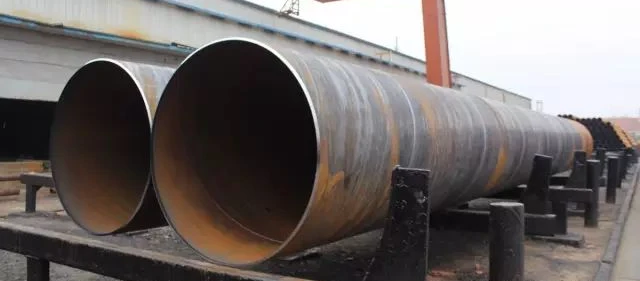
σ phase brittleness: Ao Shi stainless steel, iron stainless steel and bipolar steel are prone to σ phase crispy. Because of the α phase of a few percent of the organization, the toughness decreased significantly. "The phase is generally precipitated in the range of 600-900 ° C, especially at about 75 ° C. The most pronounced measures for prevention" should be reduced as possible in Ao's stainless steel.
475 ℃ Crispy, when the 475 ° C (370-540 ° C) is kept for a long time, the FE -CR alloy is decomposed into a low -chromium concentration α -solid solid solution with a low -chromium concentration. When the chromium concentration in the solid solution is greater than 75%, the deformation changes from slipping deformation to twin deformation, which occurs at 475 ° C brittleness.