
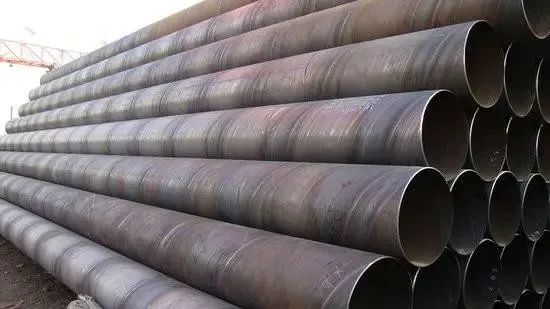
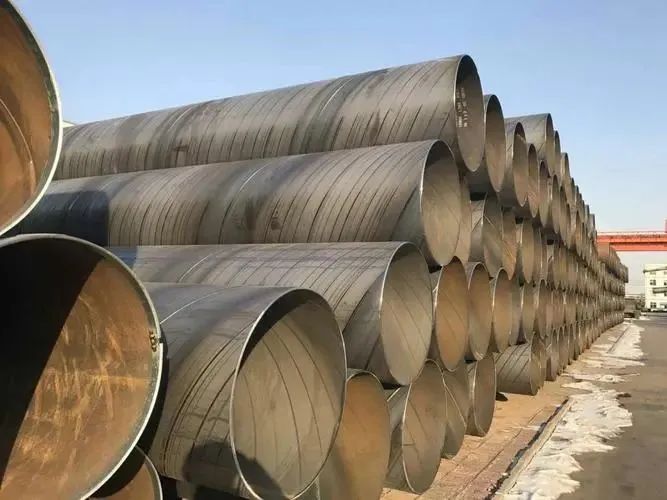
The spiral tube is also called a spiral steel pipe or a spiral tube. It is rolled into a tube blanket at the angle of the spiral line (called the mold angle) of the steel or low alloy structure steel belt at a certain spiral wire, and then welded the pipe seam , It can produce large steel pipes with narrow steel steel.
use:
The spiral tube is mainly used for the transportation pipeline of oil and natural gas, and its specifications are represented by outer diameter*wall thickness. If the spiral tube has single -sided welding and double -sided welding, the welded pipe should ensure the hydraulic test, the tensile strength of the weld, and the cold bending performance.
Production Process:
(1) The raw materials are steel rolls, welded wires, and solder. Strict physical and chemical tests must be passed before the investment.
(2) Turn with steel head and tails, use single -silk or dual -wire buried arc welding, and use automatic buried arc welding to replenish welding after rolling into steel pipes.
(3) Before forming, the tissue is clear, cut, and planed, and the surface is cleaned and transported on the surface.
(4) Use the electric connection point pressure gauge to control the pressure of the oil cylinder on both sides of the conveyor to ensure the smooth transportation of the steel.
(5) External control or internal control roller type.
(6) The weld gap control device is used to ensure that the weld gap meets the welding requirements. The pipe diameter, the error edge amount and the weld gap are strictly controlled.
(7) Internal welding and external welding are used in the United States Lincoln welding machine for single or double wire buried arc welding to obtain a stable welding specification.
(8) The welded welds are checked by continuous ultrasonic automatic injury in the online continuous ultrasonic injuries, ensuring that 100%of the spiral welded seams are not damaged detection coverage. If there are defects, automatically call the police and spray the mark, the production workers adjust the process parameters at any time to eliminate the defects in time.
(9) Cut the steel pipe into a single root with air plasma cutting machine.
(10) After cutting into a single steel pipe, each batch of steel pipes must conduct a strict first inspection system to check the mechanical properties, chemical ingredients, dissolved conditions, the surface quality of the steel pipe, and the inspection of the steel pipes. Then it can be officially put into production.
(11) There is a part of a continuous tone detection mark on the weld. After manual ultrasonic and X -ray reviews, if there are defects, after repair, it is not tested again until it is confirmed that the defect has been eliminated.
(12) The tube where the tube -type joints that intersect the welded weld and intersect with the spiral welding are all checked by X -ray TV or filming.
(13) Each steel pipe is tested by static water pressure, and the pressure is sealing by radial seal. The test pressure and time are strictly controlled by the steel pipe hydraulic microcomputer detection device. The test parameter is automatically printed.
(14) Machinery processing at the end of the pipeline, so that the end surface is vertical, and the horn angle and blunt edges are accurately controlled.