

Galvanized steel can be welded as long as appropriate welding conditions such as welding materials, welding surfaces, welding current, welding speed, and welding methods are used.
Generally, the welding strength of ordinary steel will not be compromised. However, as the thickness of the galvanization increases, the range of suitable welding conditions narrows, making welding more difficult. Therefore, it is advisable to completely remove the zinc from the welding area before welding.
When welding galvanized steel, the following points should be noted:
(1) Welding produces a large amount of smoke that can adversely affect welders' emotions when inhaled. Therefore, it is necessary to wear masks or install smoke exhaust equipment.
(2) After welding, welding slag must be removed, and peeled-off zinc layers should be repaired with high-zinc paint or zinc welding.
In conclusion, welding does not present any particular problems. However, on-site welding can often compromise aesthetics, so bolt connections are preferred whenever possible.
These are the main considerations for welding hot-dip galvanized steel. Hot-dip galvanized steel pipes are commonly used in transportation and construction. Hot-dip galvanizing is a process technology that involves immersing metals such as steel, stainless steel, and cast iron in molten metal or alloy to obtain a coating.
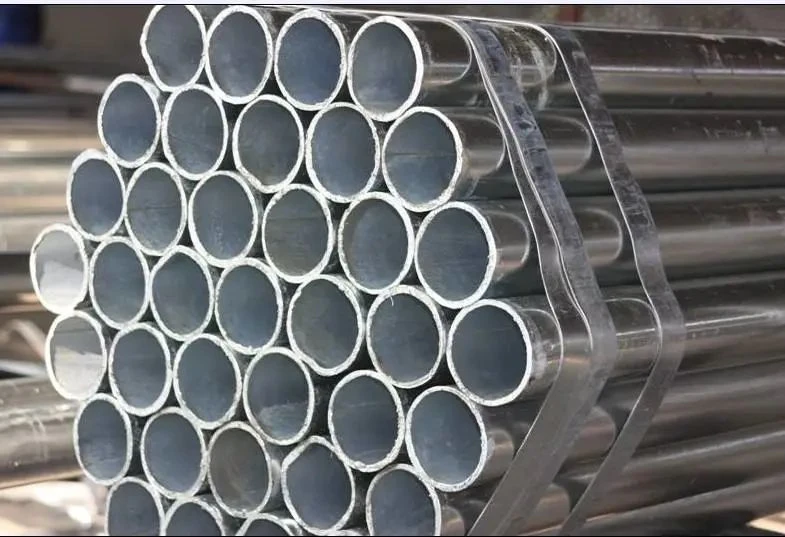
The advantages of hot-dip galvanizing extend beyond corrosion prevention. Firstly, it is cost-effective: the cost of rust prevention through hot-dip galvanizing is lower than that of other paint coatings. Secondly, it is durable: standard hot-dip galvanizing can maintain rust prevention for over 50 years without repair. Thirdly, it is reliable: the galvanized layer is metallurgically bonded to the steel, becoming an integral part of the steel surface, ensuring reliable durability of the coating. Fourthly, the coating is tough: the galvanized layer forms a special metallurgical structure that can withstand mechanical damage during transportation and use. Fifthly, it provides comprehensive protection: every part of the galvanized article, even in concavities, sharp corners, and hidden areas, can be fully protected by zinc. Lastly, it saves time and effort: the galvanizing process is faster than other coating methods, eliminating the need for on-site painting after installation.