
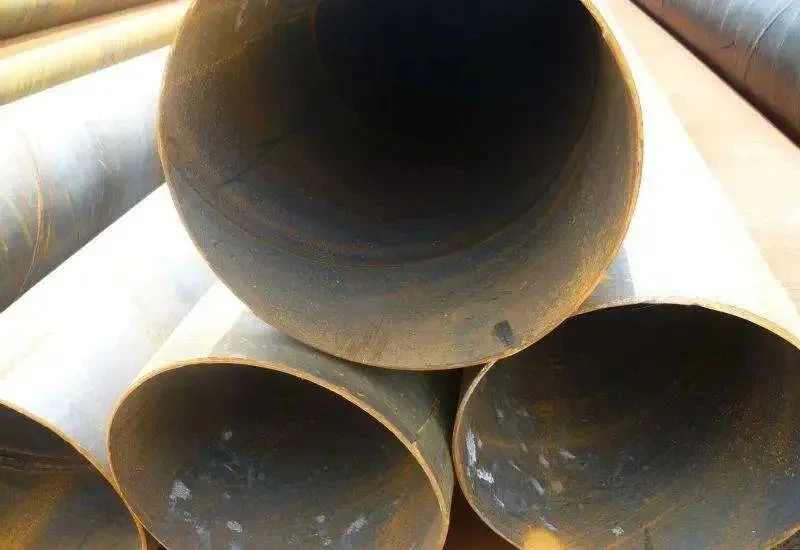
Buried arc welding straight seam steel pipes are characterized by strong adaptability, and can be flexibly produced in the diameter. It uses a narrow square blank to make large diameter welded pipes, and its production cost is low and the process is simple. More importantly, it can easily achieve the production of large -caliber pipelines. Most large -caliber welded pipes are used in this way.
Compared with straight steel pipes, the welds of spiral steel pipes cleverly avoid the low -impact resistance direction of the steel pipe, thereby turning the original disadvantage into an advantage. The spiral steel pipe is made of steel rolls as the raw material and made of hot squeeze and automatic double -sided arc welding process to ensure its high -quality and high efficiency welding.
1. The weld gap control device is an indispensable link in the welding process. It accurately controls the weld gap and pipe diameter to ensure that the strict welding requirements of the error edge and the weld gap.
2. In the pre -welding process, the tail of the tanded steel is welded by welding through a single -silk or double wire buried arc, and then automatically buried arc welding repair after rolling into a steel pipe to ensure the welding quality.
3. Advanced online continuous ultrasonic automatic probe to conduct a comprehensive inspection of the welds. Once the defect is found, the police immediately call the police and spray the mark to facilitate the timely adjustment of the process parameters and eliminate potential problems.
4. Before molding, a number of pre -processing of the steel zone includes straight, cutting, planing, surface cleaning and pre -curved to ensure the quality of steel plate before welding.
5. The precise control of the electrical contact pressure gauge ensures that the pressure of the oil cylinder on both sides of the conveyor is stable to ensure the smooth transportation of the steel.
6. Each link in steel pipe manufacturing has been strictly inspected, including mechanical performance, chemical composition, melting status, surface quality, etc. to ensure the qualifications of product manufacturing process.