

The roller molding method can be roughly divided into three categories, that is, the stage molding method, natural molding method and standing roller composition method.
1. Period formation method: Phase forming method is a longitudinal formation method consisting of a series of pair -pair -type rollers. It can also be classified according to the characteristics of the billet horizontal forming and the characteristics of the longitudinal forming of the tube.
(1) Classification according to the characteristics of horizontal molding: Bring steel During the continuous molding process, according to the trajectory of the horizontal cross -section plastic bending trajectory, it can be divided into the edge bending method of bending on the edge of the steel edge. The central curved forming method, the circular bending molding method of bending on the full width of the belt, and the double -radius hole -type bending molding method.
(2) Classification according to the characteristics of the vertical molding of the tube: Divide according to the distribution form of the bottom line of the forming pipe, and the forming of the welded pipe can also be divided into four types, namely the mountain forming method, downhill forming method, bottom line level method, and edge line level method. The stretching generated by the upper mountain molding method is the maximum: the vertical stretching strain generated by the downhill molding method is evenly distributed in the direction of the width of the pipeline, and the edge extension is minimized.
(3) Progress of phase molding method: At present, in the forming of straight welded pipes, such as W anti -curved bending forming method (the first few of the formal crews use the W anti -curved roller), F.F molding method (the front section of the formation is by 4 combinations by 4 combinations The more advanced forming methods such as the flat roller and the six cluster rollers) have played a positive role in improving the quality of molding.
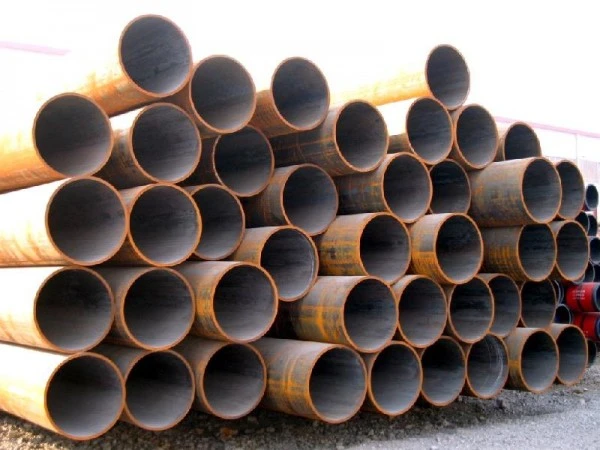
2. Natural molding method: The natural forming method is also called the roller forming method (CFE). The characteristics of this molding method are that in the process of forming, the roll group is configured along the vertical bonding edge of the billet to control the edge extension. At the same time, the roll groups are restrained from the outside
Extend the edge as a compressed deformation form to absorb, so that the forming process of the tanded steel is close to the forming method of natural bending shape. Therefore, it is a forming method that can prevent the edge extension and absorb marginal extension, which is suitable for the inhabitant medium -caliber thin wall tube (D> 400mm).
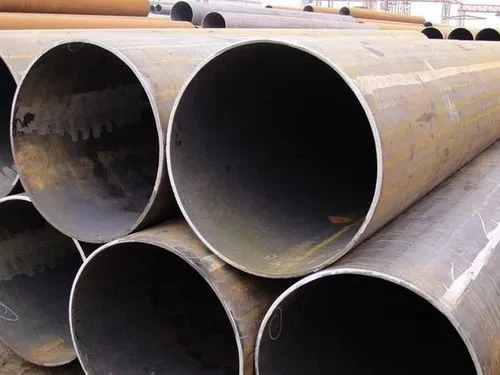
3. Establishing roller composition method: In the vertical direction of a set of rollers, the deformation of the molding process is constrained. It is a forming method that is compatible with the characteristics of stage molding and roller forming. Its characteristics are:
(1) The rolls of the roll on the tander steel forming the longitudinal stretching effect are small, making the side stretch in the minimum state.
(2) The roller group can be used to form various specifications of pipes without having to change the roller, which is good in common.
(3) The roller group is a passive roller, and the friction consumption is small, so the power required for forming is small.