
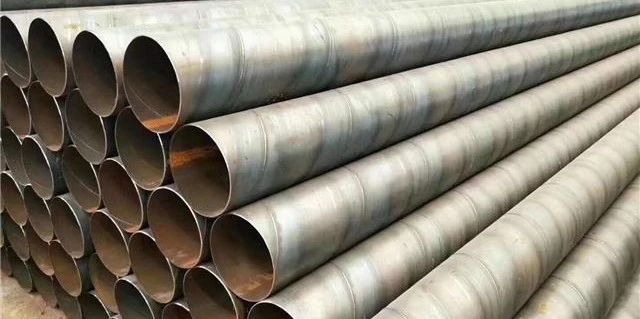
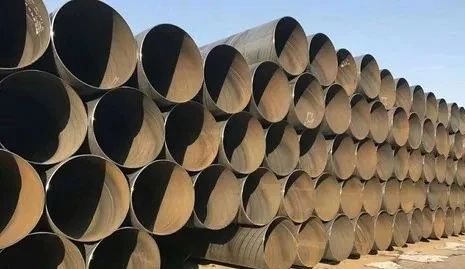
The spiral steel pipe is a spiral steel pipe made of steel or coils by spiral -shaped tortuous, and actively welded with both sides and welded inner seams and outer seams. For the following reasons, it can be widely used in water, electricity, chemical industry. In the production of occupations: Just change the diverse viewpoint, you can use steel pipes with a steel with steel with the same width, which is easy to adjust.
1. Open scroll: Open the steel plate and then enter the production line. The first ultrasound test is performed.
2. Facing milling: According to an anvasm machine, the steel plate that was originally rolled was neat, and then double -sided milling was carried out on both sides of the steel plate through the milling machine to meet the requirements of the requirements for the requirements of the requirements of the plate width, the surface of the plate edge, and the slope shape.
3. Cutting and forming: Roll the steel plate along the outside of the production line and roll it along the outside.
4. Welding cutting: Pre -welding with advanced two -sided arc welding technology, internal welding, and welding. Cut the welded steel pipe application of the steel tube ulnar to regulate the length.
5. Visual inspection: Check out some basic parameters by professional and technical personnel.
6. Ultrasonic detection: 100%inspection of the mother material on both sides of the welding and welds on both sides of the weld.
7. X -ray detecting: 100%X -ray industrial TV inspection on welding internally and outside, select the image processing system to ensure the sensitivity of the detection.
8. Suppressing test: The steel pipe is carried out in the hydraulic test machine to ensure that the steel pipe is required to meet the requirements of the test.
9. Plumbing the edge: the tube after the inspection is qualified to carry out the pipeline processing to meet the requirements of the tube -end slope
10. Final inspection: Re -perform ultrasound and X -ray detection and the testing of the pipe end magnetic powder, and the inspection does not have welding problems and pipeline disadvantages.
11. Oil labeling: After the qualified steel pipe is carried out, oil is used to resist corrosion, and marking is performed according to user standards.